HOLI FESTIVAL
Where powder fills the air, grudges dissolve, and for one glorious day — everyone is the same color.
Holi — Festival of Colors
More Than Color
Holi is one of Hinduism’s most joyful festivals — a full-day explosion of pigment, music, and togetherness that marks the arrival of spring and the triumph of good over evil. Observed on the full moon of the Hindu month of Phalguna, it typically falls in March, when the air first warms and flowers begin to open.
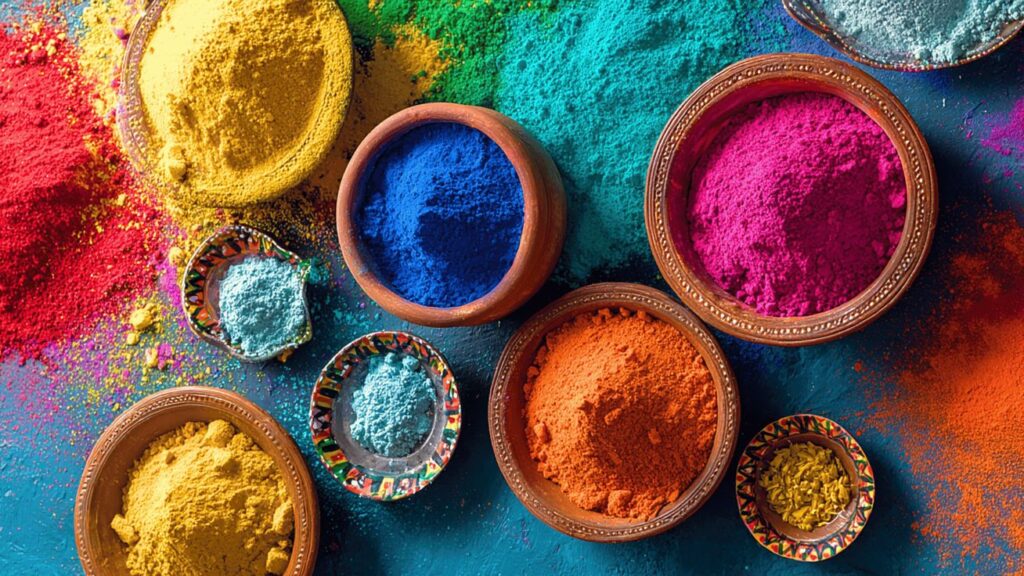
But Holi was never really about the colors. It is about what the colors represent: the breaking of barriers. On this single day, age, caste, class, and creed collapse under a shared cloud of gulal. The servant and the employer, the elder and the child, the stranger and the neighbor — all become equal targets of a well-aimed fistful of pink.
“Holi reminds us that beneath every disagreement and every difference, there is a person who would laugh if you threw yellow powder at their face.”
The festival draws on rich mythology. The most beloved legend is that of Prahlad — a boy of fierce devotion to Lord Vishnu — whose demon king father tried to have him burned alive with the help of his fireproof sister, Holika. Prahlad emerged unharmed; Holika perished. The bonfire ritual of Holika Dahan, performed the night before Holi, commemorates this victory of faith over cruelty.
Did You Know?
The word “Holi” is believed to derive from “Holika.” The festival’s name itself is a reminder that destruction of the negative is what makes space for joy.
The Rituals
How Holi Is Celebrated
Celebrations begin the night before with Holika Dahan — a community bonfire around which families gather to sing, pray, and offer grains to the flames. The fire symbolizes the burning of ego, past wrongs, and anything that no longer serves. The ashes are sometimes pressed to the forehead as a blessing carried into the new season.
Then comes morning. The main day — Rang Panchami or Dhulandi in different regions — begins with the application of gulal, the bright dry powders that have become Holi’s global icon. Water guns and balloons transform streets into joyful chaos. Boundaries dissolve. Strangers hug. Elders giggle. The whole neighborhood smells of rose water and marigold.
The afternoon slows into something sweeter: homes fill with the smell of gujhiya frying, tables heavy with malpua and thandai, and the particular contentment of people who have been silly together.
Thandai — a chilled drink of milk, nuts, rose petals, and spices — is the traditional Holi beverage, shared freely among guests as a gesture of warmth and welcome. It is cooling in the literal sense, a welcome relief after hours in the spring sun.
Holi Across India
India’s diversity means there is no single Holi. The spirit is universal; the rituals are wonderfully regional. Each version is a lens through which a different community sees the same idea — joy, renewal, and the suspension of ordinary life.
Mathura & Vrindavan
The most legendary celebrations, tied to Lord Krishna’s own playfulness. The Lathmar Holi of Barsana — where women chase men with sticks in joyful mock battle — is famous worldwide.
Punjab
Holi coincides with the Sikh festival of Hola Mohalla, marked by martial arts displays, kirtan, and community feasts that stretch through the day.
Bengal
Known as Dol Jatra, it centers on the swinging of deities in flower-laden palanquins. Rabindranath Tagore gave it a cultural dimension through music and dance that persists today.
South India
In many southern states, the festival is called Kamavali and is associated with Kamadeva, the god of love. The mood is devotional more than raucous.
Global Diaspora
From New York to Melbourne, Holi has become an intercultural event, embraced by people of all faiths — a rare festival whose joy translates across every border.
The Deeper Meaning
Forgiveness, Renewal & What Holi Is Really For
The most quietly radical thing about Holi is its emphasis on forgiveness. The tradition of visiting adversaries, applying color to their cheeks, and offering sweets is not symbolic — it is meant literally. Long-held grievances are supposed to end. Relationships are meant to be reset. The colors are the vehicle; the reconciliation is the point.
This makes Holi an unusual kind of festival: not just celebratory, but restorative. It carries within it an annual invitation to ask: what am I still holding onto that I could simply let go?
Eco-conscious Celebrations
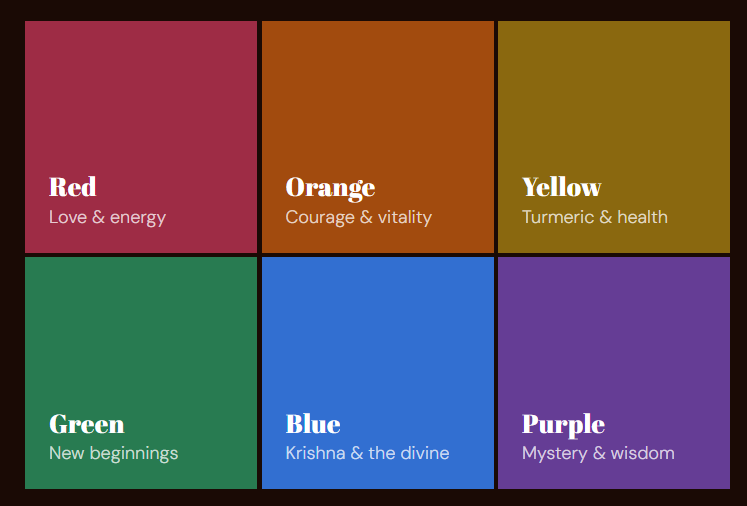
There is a growing movement to return Holi colors to their natural origins — turmeric for yellow, hibiscus for red, indigo for blue. Beyond beauty, this is an act of memory: a recovery of how the festival was always meant to be celebrated.
As the world grows more divided, Holi’s message carries an almost urgent relevance. The festival has no hierarchy of participants. It asks nothing of you except your presence and your willingness to be a little ridiculous for a few hours. That willingness, it turns out, is surprisingly hard to maintain — and more important than we usually admit.
In an era of curated identities and careful distances, Holi insists on the ancient, inconvenient truth: we are better when we are covered in the same colors.
Happy Holi.
May your colors be bright, your gujhiya crispy, your thandai cold, and your grudges — every last one — dissolved by noon.
A celebration of Holi — the Festival of Colors.
May the spirit of renewal find you wherever you are.