Stop Coming Home Exhausted
What if the point of going somewhere wasn’t to see everything, but to actually be there?
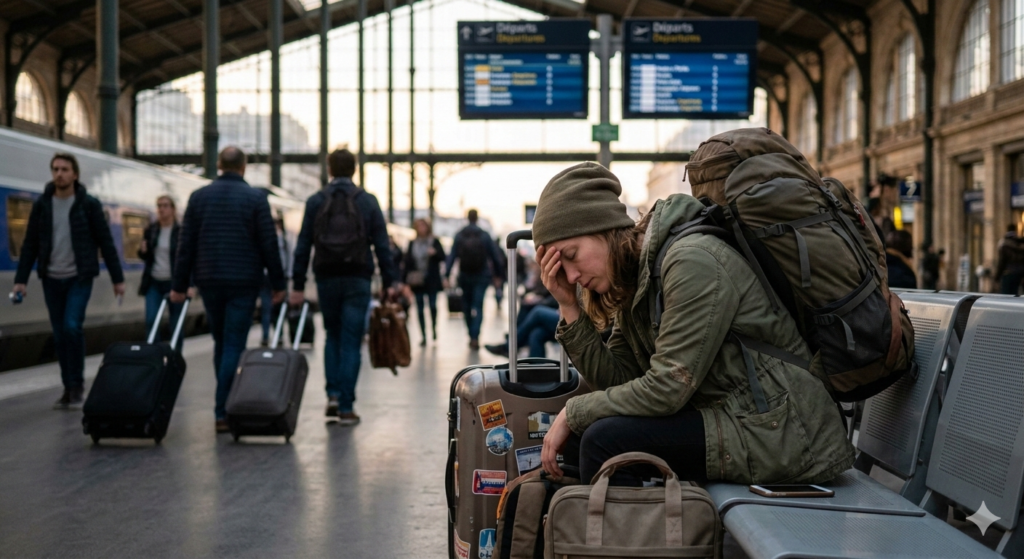
There is a particular kind of exhaustion that comes from vacation. You know the one. You return home more tired than when you left, your phone full of photos you barely remember taking, your body carrying the accumulated fatigue of early mornings, late nights, and the relentless pressure to see it all. You hit the famous landmarks. You ate at the recommended restaurants. You checked off the list. And somehow, you feel like you weren’t really there at all.
This is what modern travel has become for many of us: a performance of having been somewhere, rather than the experience of being there. We optimize itineraries like we are solving logistical puzzles. We photograph moments instead of inhabiting them. We move through cities at the speed of content creation, compiling evidence that we traveled without ever really arriving.
Slow travel is the counterargument. It is the choice to stay longer, see less, and move at a pace that allows you to notice things. Not the things in the guidebook — though those might be there too — but the things that only reveal themselves when you stop performing tourism and start paying attention.
✦ ✦ ✦
The Myth of Coverage
We have been conditioned to measure travel by coverage. How many cities? How many countries? How many landmarks can you fit into a week? The assumption is that more is better, that breadth equals richness, that seeing everything once is more valuable than seeing something deeply.
But this is a fundamentally flawed way to experience a place. You cannot understand a city in three days. You cannot absorb a culture between Instagram stories. What you get instead is a greatest-hits version: the Eiffel Tower without Paris, the Colosseum without Rome, the temples without Kyoto. You collect images, not experiences. You move through geography without encountering place.
Slow travel rejects this premise entirely. It argues that depth is more valuable than breadth, that understanding requires time, and that the point of travel is not to compile a portfolio of places you have technically been, but to actually be somewhere long enough to let it change you.
The best parts of a place are rarely the ones you planned to see. They’re the café you stumbled into on the third morning, the conversation with a stranger on a long walk, the neighborhood you found by getting deliberately lost.
What You Gain by Staying
When you stay in one place for more than a few days, something shifts. The initial novelty wears off, and what replaces it is something quieter and more substantial: familiarity. You start to develop rhythms. You find a favorite bakery. You learn which streets are worth walking down slowly. You stop consulting maps and start navigating by landmarks only you would recognize.
This is when a place stops being a destination and starts becoming somewhere you temporarily live. You are no longer a tourist performing the role of traveler. You are just a person in a place, which is exactly the perspective you need to actually see it.
You also gain time — not just in hours, but in the quality of attention you can bring to those hours. When you are not racing to the next site, you can sit in a park for an hour without guilt. You can spend an entire afternoon in a museum instead of power-walking through it. You can take a day to do nothing and not feel like you are wasting your trip. Because the trip is not about maximizing sightseeing. It is about inhabiting a different rhythm of life for a while.
The Economics of Slow Travel Counterintuitively, slow travel is often cheaper. When you stay in one place longer, you can rent apartments instead of hotels, cook some of your own meals, and avoid the constant transit costs of moving between cities. The financial pressure to “make the trip worth it” by cramming in experiences dissolves when you are spending less per day simply by staying put.
The Problem with Photographic Proof
We have developed a strange relationship with travel photography. The camera has stopped being a tool for capturing memories and has become a tool for validating that the memory happened at all. We photograph landmarks not because we want to remember them, but because we need to prove we were there. The photo becomes the point, and the experience becomes the inconvenient gap between arrivals at photo-worthy locations.
Slow travel allows you to break this cycle, if you let it. When you are in a place long enough, the urgency to document everything fades. You take fewer photos because you are not constantly in performance mode. The moments you do photograph feel less like evidence and more like actual memories — things you want to return to, not things you need to prove happened.
There is also the simple fact that constantly mediating experience through a lens means you are not fully present. You are composing shots, checking lighting, reviewing images. You are creating a record of being somewhere while simultaneously removing yourself from the act of being there. Slow travel gives you permission to put the camera down. The place will still be there tomorrow. You can see it first, photograph it later, or not photograph it at all.
The Texture of Ordinary Life
One of the underrated pleasures of slow travel is access to the mundane. When you stay somewhere long enough, you stop doing “vacation things” and start doing regular things in a different place. You go to the grocery store. You take the same bus route multiple times. You develop preferences about which coffee shop has better pastries. You overhear the same neighbors arguing in a language you do not fully understand.
This is not boring. This is the texture of actual life in that place — the parts that tourists never see because they are too busy chasing spectacle. And it is often these ordinary moments that stay with you longest: the way the light hit the kitchen table in your rental apartment, the routine of buying bread from the same bakery each morning, the quiet satisfaction of successfully navigating public transit without a map.
These experiences do not photograph well. They do not make compelling social media content. They are not on anyone’s must-see list. But they are what it actually feels like to be in a place, rather than just passing through it.
Travel is not about collecting locations. It is about allowing yourself to be changed by them — and that requires time, attention, and the willingness to be bored sometimes.
The Permission to Rest
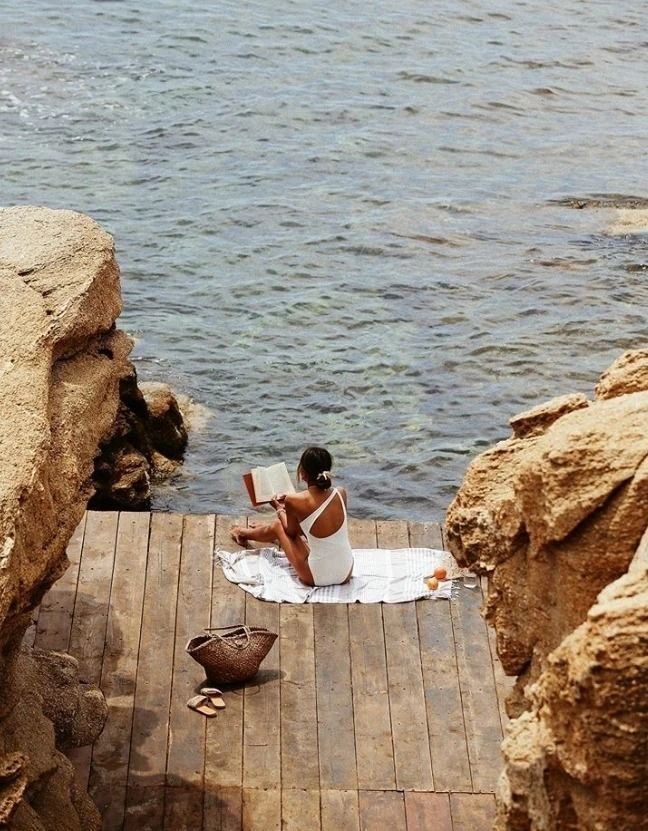
Perhaps the most radical aspect of slow travel is that it allows you to rest while traveling. This sounds obvious, but it contradicts the entire premise of vacation-as-productivity. We treat trips like projects to be executed efficiently. We wake up early to maximize daylight. We pack schedules to justify the expense. We push through exhaustion because we “only have a few days” and cannot waste them.
Slow travel removes that pressure. If you are staying in a city for two weeks, you can take a day off. You can sleep in. You can spend an afternoon reading in a park. You can be tired and actually rest instead of powering through. The trip does not have to be an endurance test. It can be a break from your life, not an intensified, geographically relocated version of it.
And when you do rest, you return to the place with fresh attention. The city does not become background noise. It stays interesting because you are not grinding yourself down trying to consume it. You get to be curious instead of exhausted, which is a vastly better state for actually experiencing anything.
What Slow Travel Asks of You
Slow travel requires something difficult: the ability to resist FOMO. You will not see everything. You will miss famous sites. People will ask if you went to X landmark, and you will have to say no, you spent the day wandering a neighborhood you cannot even name. There will be no comprehensive photo album proving you “did” the city correctly.
But what you get in exchange is the feeling of having actually been somewhere. Of knowing a place, even incompletely. Of carrying memories that are yours, not just reproductions of everyone else’s Instagram feed. Of returning home tired from travel, not from performing travel.
Slow travel is not inherently better than fast travel. Sometimes you only have a weekend. Sometimes you want to see as much as possible in the time you have. But if you are coming back from trips feeling like you need a vacation to recover from your vacation, it might be worth asking: what would happen if you went fewer places and stayed longer? What would you notice if you stopped trying to see everything and started trying to see something well?
✦
The places will still be there. The landmarks are not going anywhere. But your attention, your energy, your ability to be genuinely present — those are finite. Slow travel is a choice about how to spend them. Not on coverage, but on depth. Not on proof, but on presence. Not on the exhausting performance of having been everywhere, but on the quiet satisfaction of having actually been somewhere. Critical Perspectives · February 2026