
The Myth of the Figured-Out Twenty-Something
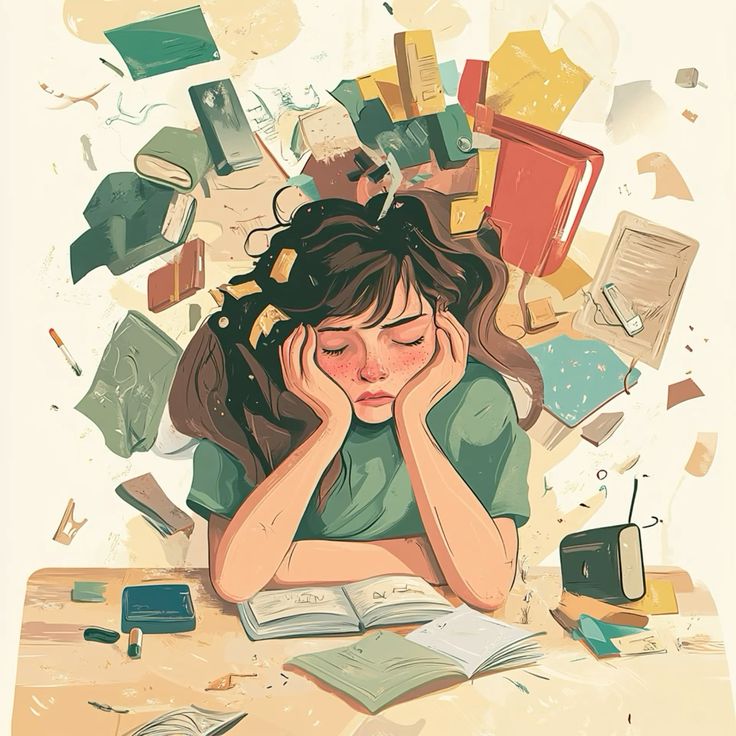
Your 20s were supposed to be for exploration. So why does everyone act like they’re an audition for the rest of your life There is a quiet cruelty in the way we talk about your twenties. On one hand, you are told this is the decade for mistakes, for wandering, for trying on different lives like poorly fitting jackets. On the other, every decision feels like it is being entered into some permanent record. Take the wrong job, date the wrong person, pick the wrong city — and suddenly you are “behind.” Behind whom? Behind what? The question is never answered, but the anxiety is real.Many young adults feel overwhelmed because society treats the twenties like a race — career clarity, relationship clarity, financial stability, identity certainty — all expected in under ten years. The finish line keeps moving, but the timer does not stop. Research shows that social comparison, shifting cities, friendships evolving, and rapid life transitions intensify the feeling of being “behind,” even when objectively, you are exactly where you need to be.This is not just generational whining. It is a documented phenomenon that researchers now call the “quarter-life crisis,” and the data suggests it is both widespread and worsening. A cross-cultural study published in SAGE Journals in 2025 found evidence of early adult crisis across eight countries, driven by overlapping pressures: economic instability, social comparison, delayed milestones, and the paralyzing burden of infinite choice. What previous generations experienced as a structured transition into adulthood now feels like freefall with a vision board. ✦ ✦ ✦ The Explore-Everything Mandate The advice industrial complex loves to tell twenty-somethings to “explore everything.” Travel. Network. Side-hustle. Learn a language. Build a personal brand. Date widely. Fail fast. The assumption is that if you sample enough experiences, clarity will eventually crystallize — you will know what you want, who you are, and where you belong. But exploration is expensive, both financially and emotionally. Research from MDPI’s 2025 study on career establishment shows that young adults face significant stress trying to balance experimentation with the need for stability. The pressure to explore is not just about curiosity; it is about future-proofing. Every choice is supposed to be strategic. Every failure is supposed to be instructive. Nothing is allowed to simply be. “The expectation to have life ‘figured out’ by 25 is not just unrealistic — it is a cultural fiction that does measurable psychological harm.” — HerCampus, 2024 Social Media’s Highlight Optimization The comparison problem is not new, but its delivery mechanism is. Social media offers a 24/7 broadcast of everyone else’s edited victories: promotions, engagements, startup launches, book deals, perfect apartments. What you do not see is the boring middle — the months of uncertainty, the jobs that did not work out, the plans that quietly fell apart. According to research summarized by Psychologs Magazine, social comparison in your twenties triggers a specific cocktail of imposter syndrome, identity confusion, and the feeling of being perpetually “behind.” The problem is not just that you are comparing yourself to others. It is that you are comparing your internal experience — messy, non-linear, full of doubt — to everyone else’s external branding. The Post-College Structure Collapse Therapy and Mindfulness researchers note that much of the difficulty in your twenties comes from the sudden loss of structure. For two decades, your path was clear: grade to grade, milestone to milestone. Then graduation hits, and the roadmap vanishes. You are supposed to know what you want, but the infrastructure that told you what to want just disappeared. What the Research Actually Says A literature review on the quarter-life crisis from a 2024 International Joint Seminar identifies the core stressors: employment instability, student debt, housing costs, delayed marriage and parenthood, and the erosion of clear career pathways. These are not personal failures. They are structural conditions that make “figuring it out” genuinely harder than it was for previous generations. A 2024 study from Springer on career goal discrepancy found that young adults experience significant distress when their goals conflict with parental or societal expectations. The pressure is not just internal — it is inherited, projected, and culturally enforced. You are supposed to want financial security, creative fulfillment, social impact, work-life balance, and personal growth all at once. The fact that these goals often contradict each other is treated as a personal problem to optimize, not a design flaw in the expectations. The Quiet Truth Here is what nobody wants to admit: most people do not have it figured out in their twenties. They just get better at faking it. The difference between looking put-together and feeling lost is often just a LinkedIn bio and a willingness to project confidence you do not feel. Research from NeuroLaunch on identity formation in your twenties emphasizes that this decade is neurologically and psychologically designed for experimentation, not certainty. Your brain is still developing. Your values are still forming. The idea that you should have locked in a stable identity by 25 is not supported by developmental psychology — it is a cultural invention, and a relatively recent one. “The quarter-life crisis is not a personal failing. It is a predictable response to contradictory demands in a high-uncertainty environment.” — EBSCO Research Starter, 2024 What Actually Helps The research on coping strategies is clear: what helps is not having answers, but having space to not have them. According to the International Joint Seminar review, effective strategies include reducing social comparison, building supportive communities, reframing failure as information rather than verdict, and — crucially — rejecting the idea that your twenties are a test you can fail. But let’s be more specific, because “just relax” is not useful advice when the rent is due and your parents keep asking about your five-year plan. First, the social comparison piece. This does not mean deleting Instagram and pretending other people’s lives do not exist. It means getting brutally honest about what you are actually comparing. When you see someone’s promotion announcement, you are comparing their highlight
Tired Is Not a Personality Trait

We have normalized exhaustion to the point where being perpetually drained feels like the baseline. Here’s why that’s dangerous — and what the science actually says. “I’m so tired” has become a greeting. A status update. A personality trait. We bond over it in group chats, laugh about it in memes, wear it like a badge of survival. Coffee mug slogans celebrate exhaustion. Productivity gurus tell us to hustle through it. Somewhere along the way, being constantly drained stopped being a warning sign and started being the expected state of modern life.But here is what nobody wants to admit: chronic tiredness is not normal. It is not a necessary cost of ambition, adulthood, or achievement. It is a symptom — of lifestyle, of biology, of a culture that has mistaken burnout for productivity. The research is clear on this, even if our collective behavior suggests otherwise. Being tired all the time is not a personality. It is a problem.A TIME magazine investigation into what they call “The Great Exhaustion” found that millions of people are living in a state of sustained depletion, driven by unsustainable work rhythms, global stressors, and the collapse of boundaries between rest and productivity. According to research from ScienceAlert, millions of Americans report being tired all the time, and the causes are more varied — and more fixable — than we acknowledge. The question is not why you are tired. The question is why we decided that was acceptable. ✦ ✦ ✦ When Exhaustion Became the Default Think about how we talk about rest. “I’ll sleep when I’m dead.” “Grind now, rest later.” “No days off.” These are not fringe attitudes — they are celebrated ones. Hustle culture turned exhaustion into proof of commitment. If you are not tired, you are not working hard enough. If you need rest, you are weak, lazy, or insufficiently ambitious. This is not ancient wisdom. It is modern marketing dressed as virtue. A StudyFinds report revealed that burnout now hits earlier than ever — often before age thirty — creating what researchers call “the burned-out generation.” What previous generations experienced as a midlife crisis is now happening in your twenties, fueled by relentless productivity demands, financial precarity, and the inability to fully disconnect from work. Powers Counseling research on burnout in young adults identifies the key drivers: emotional overload, physical depletion, and mental exhaustion compounded over time without adequate recovery. The body is not designed for this. Neither is the brain. But we have collectively decided to treat the symptoms — more coffee, better time management, wellness apps — rather than question the system producing them. “Modern exhaustion is not just about lack of sleep. It is decision fatigue, blue light exposure, caffeine dependence, and a nervous system that never fully powers down.” — Lucidance, Modern Fatigue Causes & Solutions What Chronic Tiredness Actually Is According to the Mayo Clinic, fatigue is not just feeling sleepy. It is a persistent lack of energy that does not improve with rest. It shows up as brain fog, reduced motivation, difficulty concentrating, and a feeling of running on fumes even after a full night’s sleep. WebMD distinguishes between normal tiredness — the kind you feel after a long day — and chronic exhaustion, which lingers regardless of how much you sleep or how little you do. The causes are wide-ranging. Some are biological: vitamin D deficiency, low B12, insufficient omega-3s, thyroid issues, anemia. ScienceAlert’s research emphasizes how widespread nutrient deficiencies are, particularly in populations that spend most of their time indoors under artificial light and eat highly processed diets. Your body might be tired because it is literally missing the building blocks it needs to produce energy. Other causes are neurochemical. Lucidance research highlights decision fatigue — the mental exhaustion that comes from making thousands of micro-choices daily, most of them trivial. Blue light from screens disrupts circadian rhythms, making it harder to fall asleep and stay asleep. Caffeine dependence creates a cycle: you need it to function, but it disrupts your sleep quality, which makes you need more of it. Your nervous system never gets a chance to reset. The Brain Fatigue Problem Harvard Health research into chronic fatigue syndrome reveals that persistent tiredness often has biological markers — inflammation, mitochondrial dysfunction, altered brain chemistry. This is not “all in your head.” It is in your body, your bloodwork, your neurology. The dismissal of chronic fatigue as laziness or lack of willpower is not just wrong. It is medically inaccurate. The Burnout Spiral Burnout is not the same as tiredness, but it produces it. Harmony Healing Psychotherapy’s research explains burnout as a state of emotional, physical, and mental resource depletion. You are not just tired from working too much — you are tired from caring too much, worrying too much, holding too much without adequate support or recovery time. The insidious part is how burnout normalizes itself. You start canceling plans because you are too tired. Then you stop making plans at all. Hobbies feel like chores. Friendships feel like obligations. Rest does not restore you because you are not just physically tired — you are existentially depleted. And because everyone around you is also exhausted, it feels normal. This is just what adulthood is, right? Wrong. Powers Counseling emphasizes that chronic fatigue from burnout is a warning system, not a permanent state. Your body is telling you something is unsustainable. The question is whether you will listen before the system breaks entirely. “We are living through a collective exhaustion crisis, and we are treating it like an individual failure of time management.” — TIME, “Why We’re More Exhausted Than Ever” What Actually Helps The solutions are less glamorous than we want them to be, because they require structural changes, not just optimization hacks. But they work, and the research backs them up. First, sleep hygiene is non-negotiable. Not as an aspiration, but as a baseline requirement. This means consistent sleep schedules, reducing blue light exposure before bed, creating an actual
Stop Coming Home Exhausted
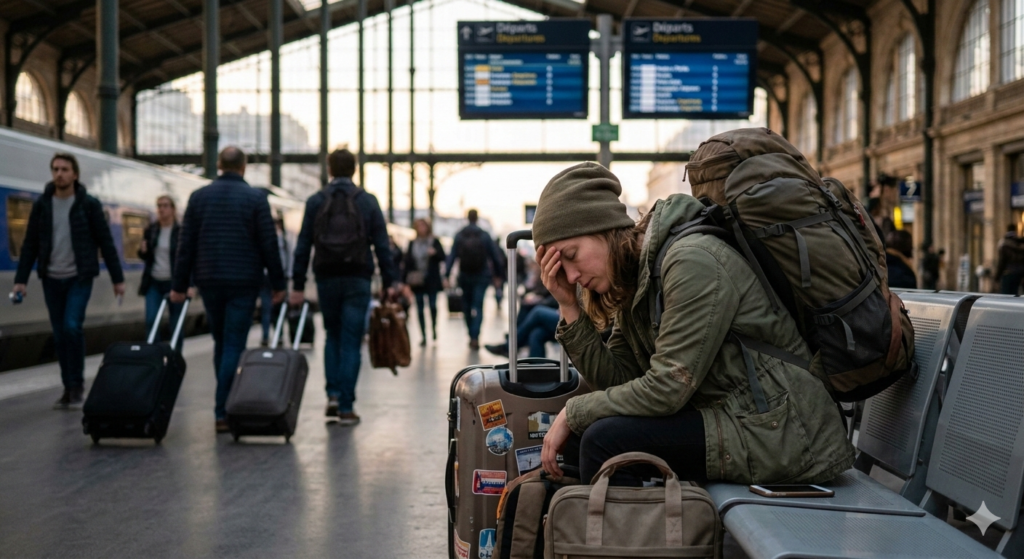
What if the point of going somewhere wasn’t to see everything, but to actually be there? There is a particular kind of exhaustion that comes from vacation. You know the one. You return home more tired than when you left, your phone full of photos you barely remember taking, your body carrying the accumulated fatigue of early mornings, late nights, and the relentless pressure to see it all. You hit the famous landmarks. You ate at the recommended restaurants. You checked off the list. And somehow, you feel like you weren’t really there at all. This is what modern travel has become for many of us: a performance of having been somewhere, rather than the experience of being there. We optimize itineraries like we are solving logistical puzzles. We photograph moments instead of inhabiting them. We move through cities at the speed of content creation, compiling evidence that we traveled without ever really arriving. Slow travel is the counterargument. It is the choice to stay longer, see less, and move at a pace that allows you to notice things. Not the things in the guidebook — though those might be there too — but the things that only reveal themselves when you stop performing tourism and start paying attention. ✦ ✦ ✦ The Myth of Coverage We have been conditioned to measure travel by coverage. How many cities? How many countries? How many landmarks can you fit into a week? The assumption is that more is better, that breadth equals richness, that seeing everything once is more valuable than seeing something deeply. But this is a fundamentally flawed way to experience a place. You cannot understand a city in three days. You cannot absorb a culture between Instagram stories. What you get instead is a greatest-hits version: the Eiffel Tower without Paris, the Colosseum without Rome, the temples without Kyoto. You collect images, not experiences. You move through geography without encountering place. Slow travel rejects this premise entirely. It argues that depth is more valuable than breadth, that understanding requires time, and that the point of travel is not to compile a portfolio of places you have technically been, but to actually be somewhere long enough to let it change you. The best parts of a place are rarely the ones you planned to see. They’re the café you stumbled into on the third morning, the conversation with a stranger on a long walk, the neighborhood you found by getting deliberately lost. What You Gain by Staying When you stay in one place for more than a few days, something shifts. The initial novelty wears off, and what replaces it is something quieter and more substantial: familiarity. You start to develop rhythms. You find a favorite bakery. You learn which streets are worth walking down slowly. You stop consulting maps and start navigating by landmarks only you would recognize. This is when a place stops being a destination and starts becoming somewhere you temporarily live. You are no longer a tourist performing the role of traveler. You are just a person in a place, which is exactly the perspective you need to actually see it. You also gain time — not just in hours, but in the quality of attention you can bring to those hours. When you are not racing to the next site, you can sit in a park for an hour without guilt. You can spend an entire afternoon in a museum instead of power-walking through it. You can take a day to do nothing and not feel like you are wasting your trip. Because the trip is not about maximizing sightseeing. It is about inhabiting a different rhythm of life for a while. The Economics of Slow Travel Counterintuitively, slow travel is often cheaper. When you stay in one place longer, you can rent apartments instead of hotels, cook some of your own meals, and avoid the constant transit costs of moving between cities. The financial pressure to “make the trip worth it” by cramming in experiences dissolves when you are spending less per day simply by staying put. The Problem with Photographic Proof We have developed a strange relationship with travel photography. The camera has stopped being a tool for capturing memories and has become a tool for validating that the memory happened at all. We photograph landmarks not because we want to remember them, but because we need to prove we were there. The photo becomes the point, and the experience becomes the inconvenient gap between arrivals at photo-worthy locations. Slow travel allows you to break this cycle, if you let it. When you are in a place long enough, the urgency to document everything fades. You take fewer photos because you are not constantly in performance mode. The moments you do photograph feel less like evidence and more like actual memories — things you want to return to, not things you need to prove happened. There is also the simple fact that constantly mediating experience through a lens means you are not fully present. You are composing shots, checking lighting, reviewing images. You are creating a record of being somewhere while simultaneously removing yourself from the act of being there. Slow travel gives you permission to put the camera down. The place will still be there tomorrow. You can see it first, photograph it later, or not photograph it at all. The Texture of Ordinary Life One of the underrated pleasures of slow travel is access to the mundane. When you stay somewhere long enough, you stop doing “vacation things” and start doing regular things in a different place. You go to the grocery store. You take the same bus route multiple times. You develop preferences about which coffee shop has better pastries. You overhear the same neighbors arguing in a language you do not fully understand. This is not